
The Warm Weight of Armenian Stories
The influence of my Armenian Heritage on my writing.
David Alexanian
5/8/20243 min read
The Warm Weight of Armenian Stories
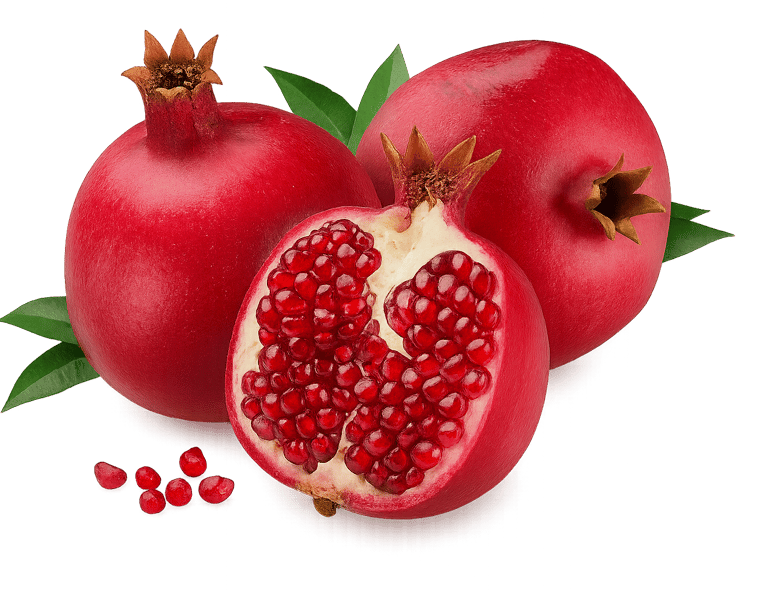
Somewhere in every Armenian home—even the modern ones with their blue LED clocks and IKEA furniture there is a bowl of pomegranates that never seems to empty. Maybe they get replaced quietly. Maybe they’re the same hardened old fruits that have been sitting there since last winter. But they’re always there, bright and stubborn, as if holding the stories of the people who put them out in the first place.
When I think about Armenian storytelling, I think about those pomegranates.
Not because they’re symbolic, although every outsider loves to tell us that , but because they are familiar. They’re warm. They anchor a room. Armenians don’t tend to put things out for show. We put things out because they remind us of someone, or somewhere, or a moment that should never disappear. A pomegranate on the table is a way of saying: We are still here. We remember who set the table before us.
I grew up surrounded by those quiet reminders. Not grand speeches. Not polished monologues about “identity.” Just the small, steady rituals that turn a house into a home. Sunday mornings with the kettle hissing, someone slicing sujuk with a knife that should have been replaced years ago, and the smell of fresh bread drifting through a place that has never known silence. Even laughter has weight in an Armenian household—a kind of echo that carries back through the generations, as though our ancestors lean forward to listen.
Armenian stories don’t start on the page. They start in kitchens and courtyards and on long walks after dinner. They start over good Cognac and strong Armenian coffee. They begin with someone saying, “Let me tell you something,” and someone else responding, “I know this one.” But we tell it again anyway, over and over. The children politely refrain from rolling their eyes, not yet understanding the importance of it all. Not yet. Our stories survive because they are repeated, not because they’re perfected.
When I write, I feel every echo of that tradition. It doesn’t matter if the setting is Paris, or Tehran, or a Montréal apartment. The Armenian heartbeat finds its way through. Not in a loud way. Not in slogans. More like a low hum beneath the floorboards . A constant, steady, familiar feeling that guides my thoughts.
There’s a phrase older Armenians say when they’re reminiscing: “Anoush jan,” which literally means “sweet soul,” but really means, “Sit down. Stay a little. Let me tell you something warm.” Hospitality is in the stories. Love is in the stories.
That’s the tone I chase when I write. Not epic declarations, not heroic posturing — just the soft, lived-in truth of people who’ve carried too much and still manage to love fiercely. Armenian stories aren’t neat. They wander. They double back. They spill over with emotion (much to the chagrin of my editor at times), but not in a way that begs for pity. They carry the weathered tenderness of people who have lost plenty and somehow still know how to pour a cup of coffee for a guest.
I’ve always believed Armenians have a special relationship with the sky. Maybe it’s the mountains. Maybe it’s the way our ancestors built monasteries so high that clouds brushed their doors. Or maybe it’s because we’ve had to look upward so many times—in grief, in faith, in stubborn refusal to die of and vanish from history. Whatever the reason, our stories fall from above the way pomegranates fall from a tree: suddenly, intact, bursting with secrets.
Sometimes when I’m writing late at night, I imagine the old world. The dusty courtyards. The narrow alleys. The grandmothers leaning over balconies like sentinels of memory. I imagine pomegranates rolling across stone floors, their skins cracking open to show the hidden, glowing seeds inside , each one a tiny universe of sweetness and survival.
That’s what Armenian storytelling is to me. A handful of bright seeds held together by something weathered, something ancient, something impossible to break open without uncovering life. Something so worth the effort when you do break it open.
Warm. Familiar. Full of history, whether we name it or not.
And always, always carrying the quiet promise that our stories will outlive us, the way they’ve outlived everything else. Maybe that is why when an Armenian mother tells a fairy tale or story, she always ends with: ...and three pomegranates fell from the sky. One for the storyteller, one for the listener, and one for the whole world.
Contact
Get in touch on Social Media
Let's Connect
© 2025 David Alexanian. All rights reserved.
All literary, musical, and visual content on this website is the intellectual property of the author unless otherwise credited. No part of this site may be reproduced, distributed, or transmitted in any form or by any means without prior written permission.
*Member, SOCAN (Society of Composers, Authors and Music Publishers of Canada)